
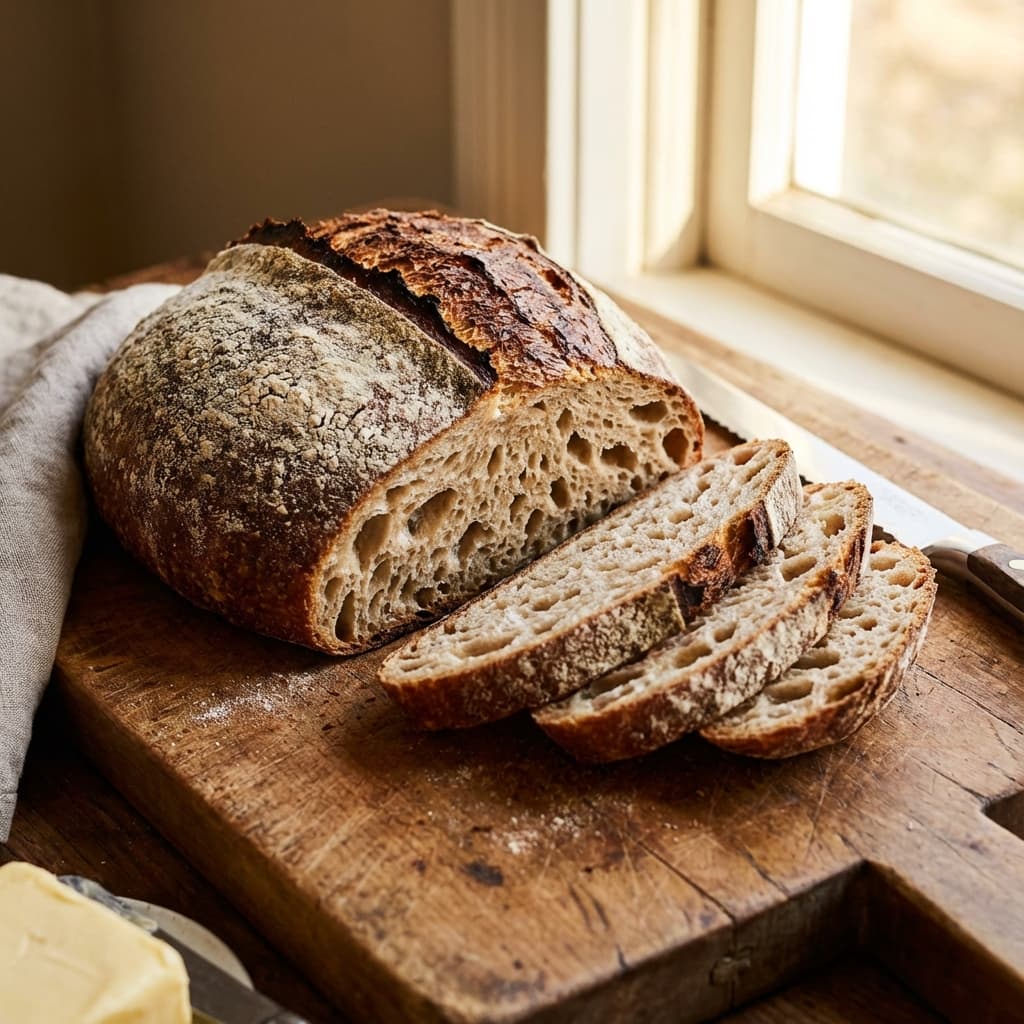
Master sourdough starter! Covers science, feeding schedules, troubleshooting, and expert tips for maintaining a healthy, active starter.
📑 Table of Contents
- Ultimate Sourdough Starter Guide: Science, Feeding Schedule & Troubleshooting
- What is a Sourdough Starter?
- How to Create a Sourdough Starter from Scratch
- The Perfect Feeding Schedule
- Signs of a Healthy Starter
- Common Sourdough Starter Problems & Solutions
- Advanced Starter Techniques
- Using Your Starter in Recipes
- Storing and Reviving Starter
- Essential Tools for Sourdough Success
- Sourdough Discard: Don't Waste It!
- Conclusion: Your Sourdough Journey
Ultimate Sourdough Starter Guide: Science, Feeding Schedule & Troubleshooting
Sourdough baking has experienced a massive resurgence, and for good reason. The complex flavors, superior digestibility, and artisanal quality of sourdough bread are unmatched. At the heart of every great sourdough loaf is a healthy, active sourdough starter. This comprehensive guide will teach you everything you need to know about creating, maintaining, and troubleshooting your sourdough starter.
What is a Sourdough Starter?
A sourdough starter is a living culture of wild yeast and beneficial bacteria (primarily lactobacilli) that naturally occur in flour and the environment. Unlike commercial yeast, which provides a quick, predictable rise, sourdough starter creates complex flavors through fermentation and produces bread with a characteristic tangy taste and chewy texture.
The Science Behind Sourdough:
When you mix flour and water and let it sit at room temperature, wild yeast and bacteria begin to colonize the mixture. These microorganisms feed on the starches in the flour, producing:
- Carbon dioxide: Creates the rise in your bread
- Lactic acid: Provides mild tanginess and improves digestibility
- Acetic acid: Contributes to the characteristic sour flavor
- Enzymes: Break down complex proteins and starches, making nutrients more bioavailable
According to research from King Arthur Baking, a mature sourdough starter contains billions of microorganisms working in symbiotic harmony.
How to Create a Sourdough Starter from Scratch
Ingredients You'll Need:
- Flour: Whole wheat, rye, or all-purpose (whole grain flours ferment faster initially)
- Water: Filtered or dechlorinated (chlorine can inhibit fermentation)
- Time: 5-7 days for a mature starter
- Patience: Essential!
Day-by-Day Starter Creation:
Day 1:
- Mix 50g whole wheat flour + 50g water in a clean jar
- Stir until no dry flour remains
- Cover loosely (allow gases to escape)
- Leave at room temperature (70-75°F / 21-24°C)
Day 2:
- You may see small bubbles—this is good!
- Discard half the mixture (50g)
- Add 50g flour + 50g water
- Stir well and cover
Days 3-7:
- Repeat the Day 2 process daily
- By Day 5-7, your starter should double in size within 4-8 hours after feeding
- It should smell pleasantly tangy (not putrid or nail-polish-like)
- Bubbles should be plentiful and evenly distributed
Pro Tip: Use our measurement converter to easily convert between grams and cups if needed, though weighing is always more accurate.
The Perfect Feeding Schedule
Once established, your starter needs regular feedings to stay healthy and active.
Daily Feeding (Room Temperature Storage):
Ratio: 1:1:1 (Starter:Flour:Water by weight)
- Discard all but 50g of starter
- Add 50g flour + 50g water
- Stir thoroughly
- Cover and let sit at room temperature
- Feed every 12-24 hours
Weekly Feeding (Refrigerator Storage):
For less frequent baking:
- Feed your starter as usual (1:1:1 ratio)
- Let it sit at room temperature for 1-2 hours
- Transfer to refrigerator
- Feed once per week
- Before baking, remove from fridge and feed 2-3 times at room temperature to reactivate
Understanding Hydration:
The standard 1:1:1 feeding creates a 100% hydration starter (equal parts flour and water by weight). You can adjust this ratio based on your needs. Use our dough hydration calculator to experiment with different hydration levels.
Signs of a Healthy Starter
A healthy, active starter exhibits these characteristics:
- Doubles in Size: Within 4-8 hours after feeding at room temperature
- Bubbly Throughout: Not just on top, but throughout the mixture
- Pleasant Aroma: Tangy, yogurt-like, slightly fruity—never putrid or acetone-like
- Dome Shape: Rises with a dome before falling (indicating peak activity)
- Passes the Float Test: A small spoonful floats in water when at peak
Common Sourdough Starter Problems & Solutions
Problem #1: Starter Isn't Rising
Possible Causes:
- Too cold (below 65°F / 18°C)
- Chlorinated water killing microorganisms
- Inconsistent feeding schedule
- Not enough time (starter too young)
Solutions:
- Move to a warmer location (70-75°F / 21-24°C is ideal)
- Use filtered or bottled water
- Feed at consistent times daily
- Be patient—some starters take 10-14 days to mature
- Try switching to whole grain flour temporarily for more nutrients
Problem #2: Liquid (Hooch) on Top
What It Is: The dark liquid is alcohol produced by hungry yeast
Solutions:
- Pour off the liquid or stir it back in
- Feed more frequently
- Increase the feeding ratio (try 1:2:2 or 1:3:3)
- This is normal for refrigerated starters—just feed before using
Problem #3: Mold Growth
Identification: Fuzzy growth (white, pink, orange, or black) on surface
Solution:
- Unfortunately, discard the entire starter and start fresh
- Mold indicates contamination and cannot be salvaged safely
- Ensure your jar and utensils are clean
- Use filtered water
For food safety guidelines, consult the FDA's safe food handling practices.
Problem #4: Smells Like Nail Polish or Acetone
Cause: Overly hungry starter producing excess acetic acid
Solutions:
- Feed more frequently
- Increase feeding ratio (1:2:2 or 1:3:3)
- Ensure adequate warmth
- After 2-3 feedings, the smell should improve
Problem #5: Too Sour
Solutions:
- Feed more frequently to reduce acidity
- Use a higher feeding ratio
- Store at slightly cooler temperatures
- Use your starter when it's younger (4-6 hours after feeding) rather than at peak
Advanced Starter Techniques
Adjusting Feeding Ratios
Different ratios produce different results:
- 1:1:1 - Standard maintenance, moderate sourness
- 1:2:2 - Less sour, more yeast activity
- 1:3:3 - Mild flavor, very active yeast
- 1:5:5 - For long fermentation, minimal sourness
Use our baker's percentage calculator to precisely calculate feeding ratios for different batch sizes.
Flour Types and Their Impact
- Whole Wheat: Fast fermentation, nutty flavor, more nutrients for microbes
- Rye: Very active fermentation, complex flavor, excellent for starting
- All-Purpose: Mild flavor, consistent results, good for maintenance
- Bread Flour: Higher protein, stronger gluten development
Using Your Starter in Recipes
When to Use Your Starter:
The best time to use your starter is at its peak—when it has doubled in size and just begins to dome. This is typically 4-8 hours after feeding at room temperature.
The Float Test:
Drop a small spoonful of starter into a glass of water. If it floats, it's ready to use. If it sinks, it needs more time or another feeding.
Scaling Recipes:
Most sourdough recipes call for 50-200g of active starter. Use our recipe scaler to adjust recipes based on how much starter you have available.
Storing and Reviving Starter
Short-Term Storage (1-2 weeks):
- Feed starter
- Let sit 1-2 hours at room temperature
- Refrigerate in covered container
- Feed weekly
Long-Term Storage (Months):
- Spread a thin layer of starter on parchment paper
- Let dry completely (24-48 hours)
- Break into flakes and store in airtight container
- To revive: Mix flakes with equal parts flour and water, resume daily feedings
Reviving a Neglected Starter:
- Remove and discard any mold (if present, start fresh instead)
- Pour off any liquid
- Take 50g of the remaining starter
- Feed with 50g flour + 50g water
- Repeat daily for 3-5 days until activity returns
Essential Tools for Sourdough Success
- Digital Scale: Precision is crucial—measure to the gram
- Glass Jar: Wide-mouth for easy feeding and monitoring
- Rubber Band: Mark the starting level to track rise
- Thermometer: Monitor ambient and dough temperature
- Stand Mixer: Optional but helpful for kneading high-hydration doughs
Sourdough Discard: Don't Waste It!
Instead of throwing away your discard, use it in:
- Pancakes and waffles
- Crackers
- Pizza dough
- Muffins and quick breads
- Pasta
These recipes don't rely on the starter's leavening power, so you can use unfed discard.
Conclusion: Your Sourdough Journey
Creating and maintaining a sourdough starter is a rewarding journey that connects you to centuries of baking tradition. While it requires patience and consistency, the results—complex flavors, superior texture, and the satisfaction of working with a living culture—are absolutely worth it.
Remember, every starter is unique, influenced by your local environment, flour, and water. Don't be discouraged by initial setbacks. With time and practice, you'll develop an intuition for your starter's needs and rhythms.
Ready to start your sourdough journey? Use our complete collection of baking tools to perfect your measurements, ratios, and timing. Happy baking!
Related Tools:
Save Your Calculations?
Get the Bakery Business OS to save recipes, track inventory, and manage orders in one place.
Reclaim Your Time →