The Ultimate Sourdough Guide: Creating Your Starter
This post may contain affiliate links. Please read my disclosure policy.

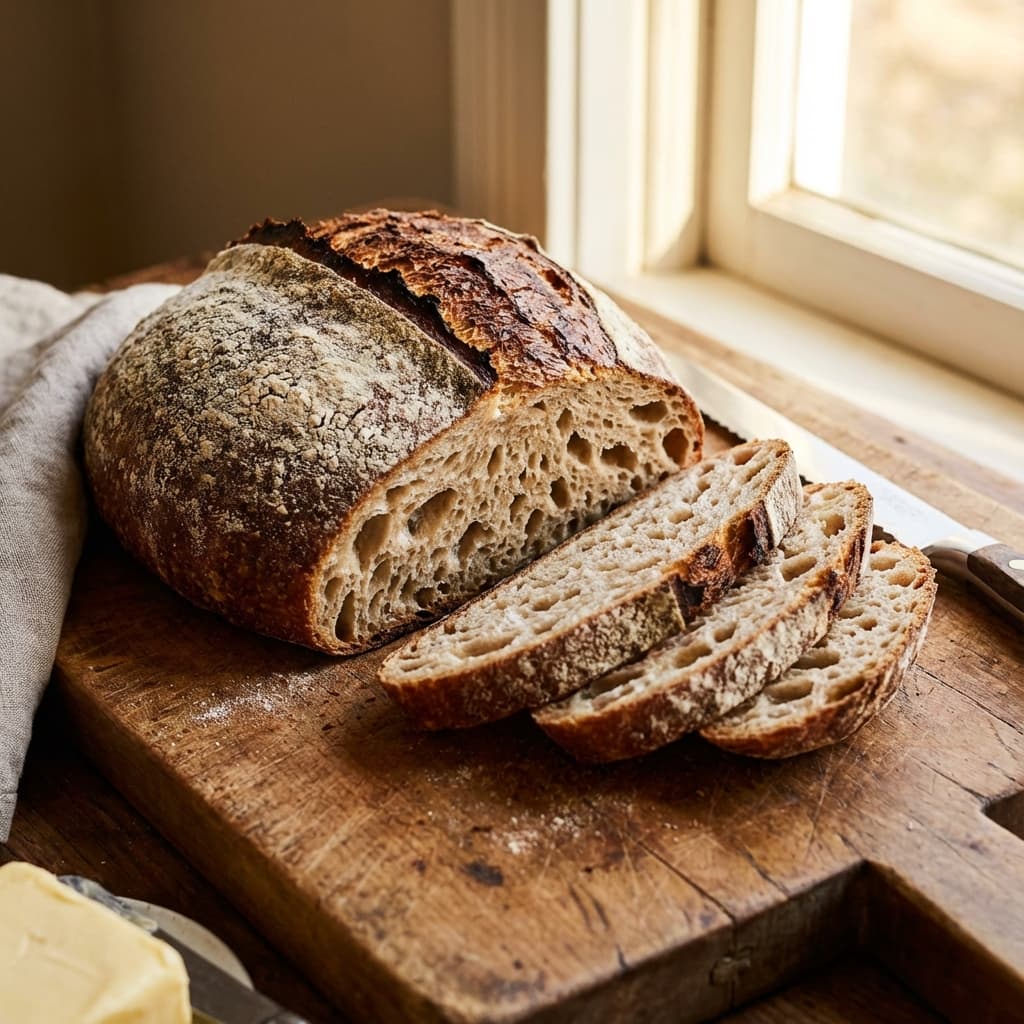
Welcome to Sarah Ait dahan's ultimate guide to starting your own sourdough journey! There is something incredibly satisfying about creating bread fro...
📑 Table of Contents
The Ultimate Sourdough Guide: Creating Your Starter
Welcome to Sarah Ait dahan's ultimate guide to starting your own sourdough journey! There is something incredibly satisfying about creating bread from nothing more than flour, water, and wild yeast. This article serves as the first step, guiding you through the seven-day process of cultivating a robust and active sourdough starter.
The Science of Wild Yeast Fermentation
A sourdough starter is a symbiotic culture of bacteria (lactobacilli) and wild yeast, cultivated from the natural environment and the flour itself. The process relies on fermentation. When flour and water mix, enzymes break down starch into simple sugars. Wild yeast consumes these sugars, producing carbon dioxide (bubbles) and alcohol, which leaven the bread. Simultaneously, lactobacilli produce lactic and acetic acids, giving the sourdough its characteristic tang and preserving the starter by creating an acidic environment hostile to harmful bacteria. This fermentation process not only rises the bread but also breaks down gluten and phytic acid, making the bread easier to digest and more nutritious.
Tips & Variations for Creating a Sourdough Starter
Tips for Starter Success:
- Consistency is Key: Feed your starter at the same time every day to establish a predictable fermentation cycle.
- Use Filtered Water: Chlorine in tap water can inhibit yeast growth. Use filtered or bottled water.
- Weigh Your Ingredients: Precision is important. Use a digital scale for 1:1 ratios of flour and water by weight.
- Warm Environment: Yeast loves warmth (70°F-80°F). If your kitchen is cold, find a warm spot (e.g., in a turned-off oven with the light on).
- Patience: It can take anywhere from 5 to 14 days to establish a strong starter. Don't give up if it's slow at first!
Variations & Considerations:
- Flour Type: Whole wheat or rye flour provides more nutrients for the yeast and can jumpstart fermentation faster than all-purpose flour.
- Discard Recipes: Don't throw away the discard! Use it for pancakes, waffles, crackers, or muffins.
- Storage: Once established, you can store your starter in the fridge and feed it once a week if you don't bake daily.
- Reviving a Starter: A neglected starter can often be revived with a few days of consistent feeding.
- Naming Your Starter: It's a tradition to name your starter! (e.g., Dough Parton, Clint Yeastwood).
- Smell Check: A healthy starter should smell pleasant, yeasty, and slightly sour. If it smells like nail polish remover or looks moldy, it might be time to start over.
Save Your Calculations?
Get the Bakery Business OS to save recipes, track inventory, and manage orders in one place.
Reclaim Your Time →
Sarah Aitdahan
Sarah Aitdahan is the founder of Sweety's Bakery and the creator of this website. A lifelong baker with a passion for perfecting the classics, she believes that baking should be accessible and joyful for everyone. This website is her way of giving back to the incredible baking community by providing free tools, resources, and recipes.