
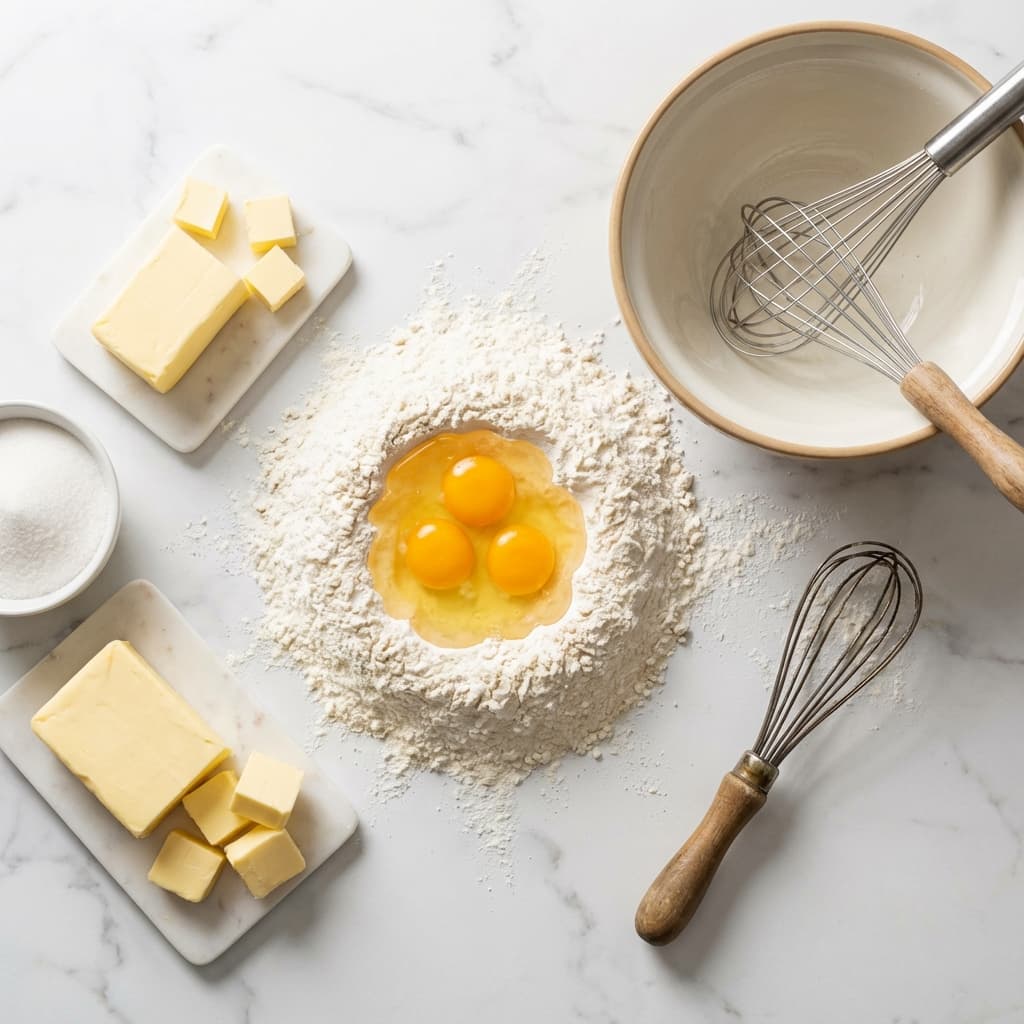
Welcome to Sarah Ait dahan's in-depth guide to mastering macarons, those elegant and delicate French confections. Often considered the Everest of bak...
📑 Table of Contents
Mastering Macarons: The Art and Science of Perfect Shells
Welcome to Sarah Ait dahan's in-depth guide to mastering macarons, those elegant and delicate French confections. Often considered the Everest of baking, achieving perfect macarons with their crisp shell, chewy interior, and signature 'feet' is a rewarding challenge. This article delves into the precise techniques and scientific principles required to consistently bake beautiful macarons.
The Science of Meringue Stability & Macaronage
Macaron success hinges on two critical scientific elements: a stable meringue and perfect 'macaronage'. Meringue, an emulsion of whipped egg whites and sugar, forms the airy structure. Its stability is vital to trap air and prevent collapse. Macaronage—the gentle folding of dry ingredients into the meringue—is a delicate balance. Over-mixing deflates the meringue, leading to flat, footless shells. Under-mixing results in lumpy, cracked shells. The ideal macaronage creates a 'lava-like' batter that flows slowly, allowing the piped shells to form a 'pellicle' (a dry skin) before baking. This pellicle then provides the necessary resistance for the signature 'feet' to develop as steam escapes during baking.
Tips & Variations for Mastering Macarons
Tips for Perfect Macaron Shells:
- Accurate Weighing: Use a digital scale for all ingredients (egg whites, almond flour, powdered sugar, granulated sugar) – even a gram off can affect results.
- Aged Egg Whites: Use egg whites that have been separated a day or two in advance and stored in the fridge. This makes them more stable.
- Sift Dry Ingredients: Sift almond flour and powdered sugar together to remove lumps and ensure a smooth batter.
- Proper Meringue Consistency: Whip egg whites to stiff, glossy peaks. Don't over-whip.
- Gentle Macaronage: Fold the batter carefully until it reaches the 'lava' consistency – not too thick, not too thin.
- Tap and Dry: After piping, tap the baking sheets firmly to release air bubbles. Let them dry until a firm skin forms.
- Oven Calibration: Use an oven thermometer to ensure precise temperature. Consistency is key.
Variations & Considerations:
- French Meringue Method: Simpler, uses raw egg whites whipped with granulated sugar.
- Italian Meringue Method: More stable, uses hot sugar syrup poured into whipping egg whites.
- Swiss Meringue Method: Egg whites and sugar are gently heated over a double boiler before whipping.
- Flavor Variations: Incorporate flavorings into the shells (e.g., cocoa powder, freeze-dried fruit powder) and fillings.
- Coloring: Use gel food coloring for vibrant hues without adding too much liquid.
- Fillings: Experiment with ganaches, buttercreams, fruit curds, or jams to complement your shells.
- Troubleshooting: Common issues include hollows, cracks, no feet, and grainy texture. Each has specific causes related to technique and science.
Save Your Calculations?
Get the Bakery Business OS to save recipes, track inventory, and manage orders in one place.
Reclaim Your Time →